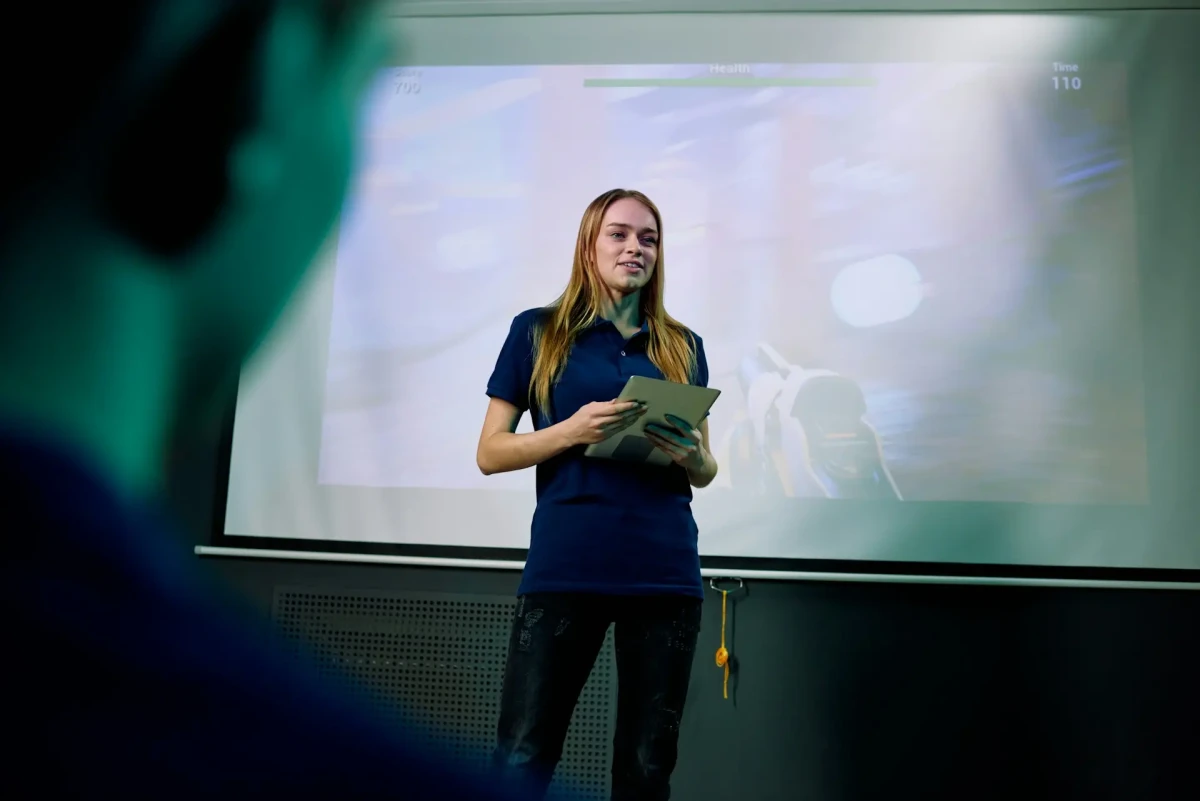
A strong pitch deck is often the very first real point of contact between a startup and a venture capital investor. Within just a few minutes, it needs to clearly communicate why your company deserves attention, trust, and funding.
In the Netherlands, where the VC market is relatively compact and relationship driven, the quality of your pitch deck largely determines whether or not you get invited to the table. This complete evergreen guide helps Dutch founders, from pre seed to Series A, create a professional, convincing, and investor ready pitch deck.
What Exactly Is a Pitch Deck?
A pitch deck is a visual presentation, usually 10 to 15 slides, designed to quickly explain your business idea, market opportunity, traction, and funding request.
It is not a full business plan. It is also not a one pager or teaser. It is the story that makes investors curious enough to continue the conversation.
The Ideal Structure for a Dutch VC Pitch Deck (10 to 15 Slides)
Below is a proven structure that works well with Dutch and European venture capital funds.
1. Cover / Hook
Company name and tagline
Your name, role, and contact details
Optionally include a strong visual hook such as a photo, chart, or demo screenshot
2. Problem
Describe the pain point you solve. Make it concrete and relevant to the Dutch market. Use data from CBS, industry organizations, or your own customer research.
3. Solution
How does your product or service solve this problem? Show the product in action with screenshots, a demo, or a simple flow. Highlight your Unique Value Proposition.
4. Market Opportunity
TAM (Total Addressable Market)
SAM (Serviceable Addressable Market)
SOM (Serviceable Obtainable Market)
Use reliable sources and stay realistic. Dutch VCs appreciate well supported market sizing.
5. Product / Demo
Show what you have already built. Focus on the core functionality.
6. Business Model
How do you make money? Clearly explain pricing, margins, and revenue streams.
7. Traction / Metrics
This is one of the most important slides. Include:
MRR / ARR
Number of customers or users
Growth metrics
Key partnerships
Other relevant KPIs
If you do not yet have traction, show validation such as pilots, waitlists, or LOIs.
8. Go to Market Strategy
How will you acquire and retain customers? Explain your sales and marketing strategy, customer acquisition costs, and sales cycle.
9. Competition & Competitive Advantage
Create a clear competitor matrix. Explain your moat, whether that is technology, network effects, IP, team expertise, or speed of execution.
10. Team
In the Netherlands, the team is extremely important. Show why this specific team is uniquely positioned to succeed. Add relevant experience, previous exits, or industry expertise.
11. Financial Projections
Include a 3 to 5 year forecast covering:
Revenue
Costs
Burn rate
Break even point
Stay realistic. Investors quickly see through unsupported hockey stick projections.
12. The Ask
How much funding are you raising?
What valuation range are you targeting?
How will the money be used? (use of funds)
Optionally mention your desired lead investor or upcoming milestones.
13. Vision & Exit (Optional but Powerful)
Where do you want the company to be in 5 to 7 years? What potential exit opportunities do you see?
Practical Tips for a Convincing Pitch Deck
Design
Keep the design clean and consistent. Use a maximum of 2 to 3 brand colors. Include plenty of white space. Limit text to around 5 to 7 lines per slide.
Storytelling
Create a logical flow. Every slide should naturally lead into the next one.
Data
Support claims with reliable sources. Dutch and European market data usually carry more weight than purely US based statistics.
Length
10 to 15 slides is ideal. Avoid going beyond 18 slides.
Versions
Create two versions: a PDF for sending, with slightly more detail, and a lighter version for live presentations.
AI Tools
Use tools such as ChatGPT, Grok, or Midjourney to speed up drafts and visuals, but keep the final deck personal and authentic. Never copy templates word for word.
Common Mistakes (and How to Avoid Them)
Too many slides or too much text
Unrealistic financial projections
No traction or insufficient validation
An unclear funding ask
Weak team storytelling
Too much focus on the product, not enough on the business
Poor design with cluttered slides or inconsistent branding
Sector Specific Attention Points
SaaS
Focus strongly on MRR, churn, CAC, and LTV.
Deep Tech / Hardware
Highlight IP, prototypes, and technical validation.
Healthtech
Explain the regulatory roadmap and clinical data.
Cleantech / Impact
Show impact metrics alongside financial metrics.
Fintech
Address compliance and licensing clearly.
Examples and Templates
Well known international references that can be adapted for the Dutch market include:
Airbnb’s original pitch deck
Uber’s early pitch decks
Sequoia and Andreessen Horowitz template structures
Platforms such as Canva, Slidebean, and Pitch.com offer solid templates, but always adapt them to the structure above.
What Happens After the Pitch Deck?
A strong deck is only the first step. After that comes:
Targeted investor outreach
Warm introductions through networks
Preparation for due diligence
Term sheet negotiations
On VentureCapital.nl, startups can easily create a profile, upload their deck, and connect directly with relevant Dutch and European VC investors.
Conclusion
A strong pitch deck combines a compelling story, solid numbers, and professional design. It is not a piece of art, but a strategic tool designed to make the right investors curious enough to continue the conversation.
Start building your first version today. Test it with mentors, advisors, or fellow founders, and continue refining it over time.